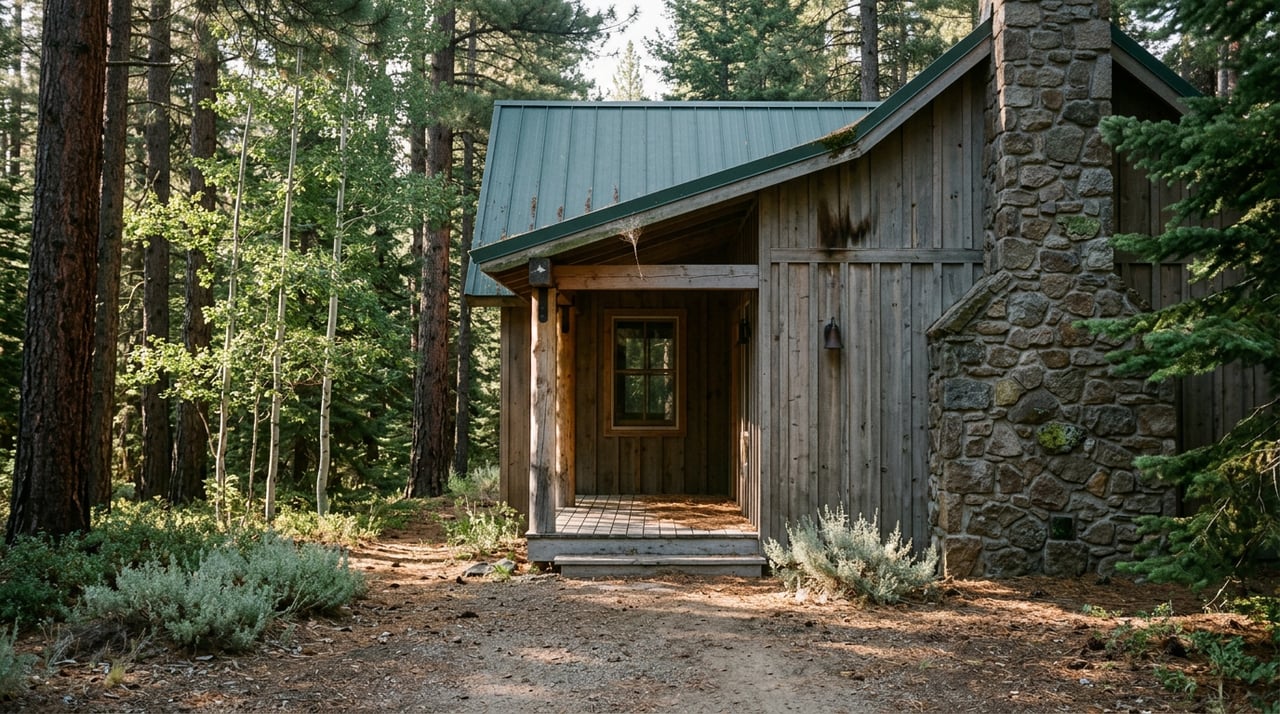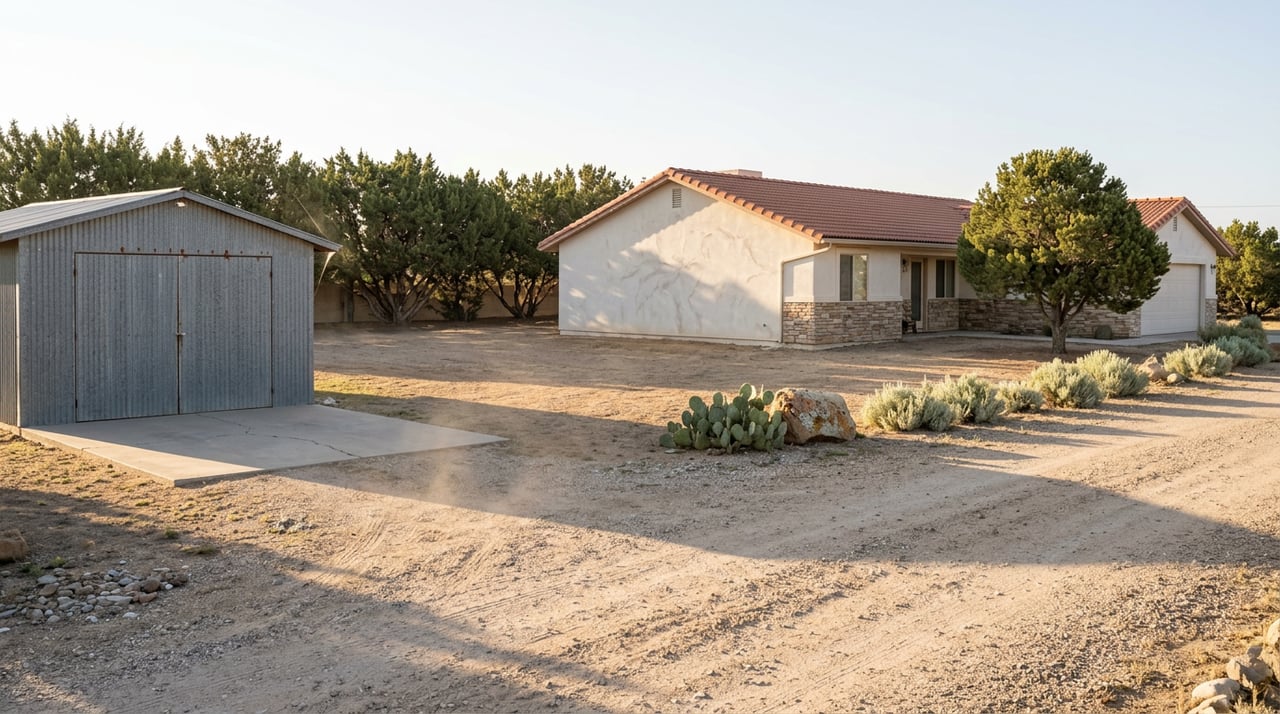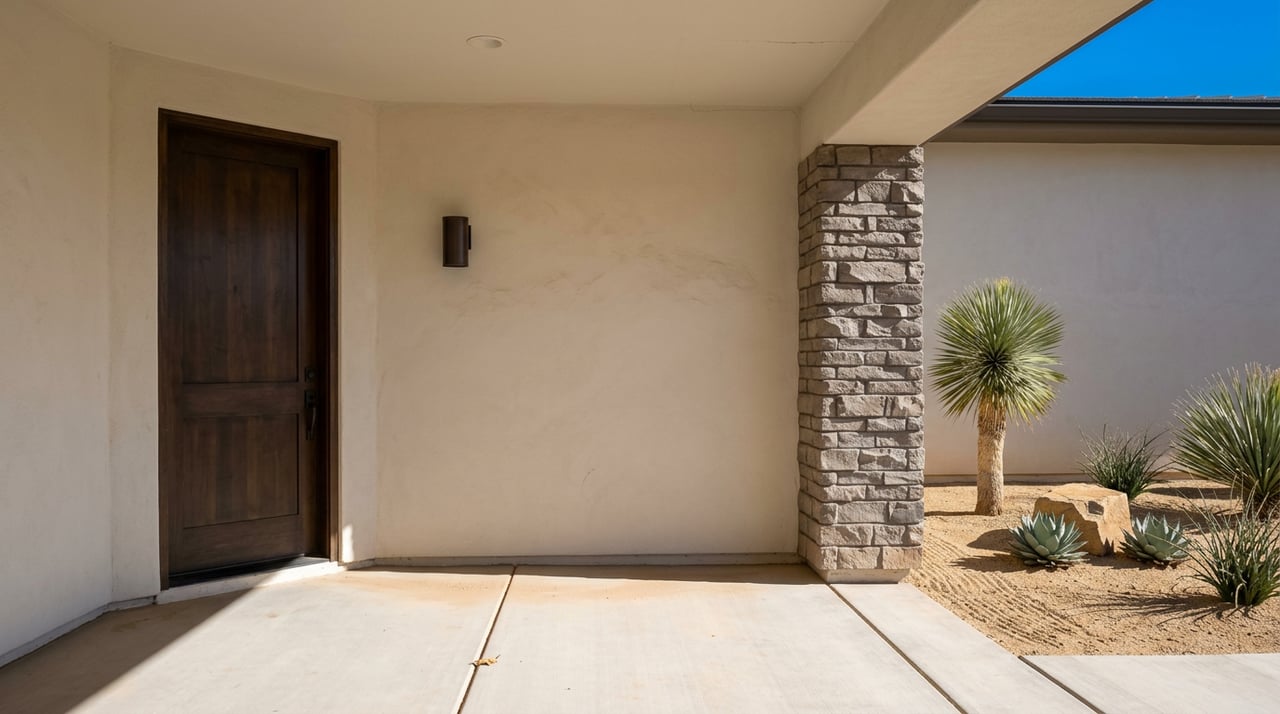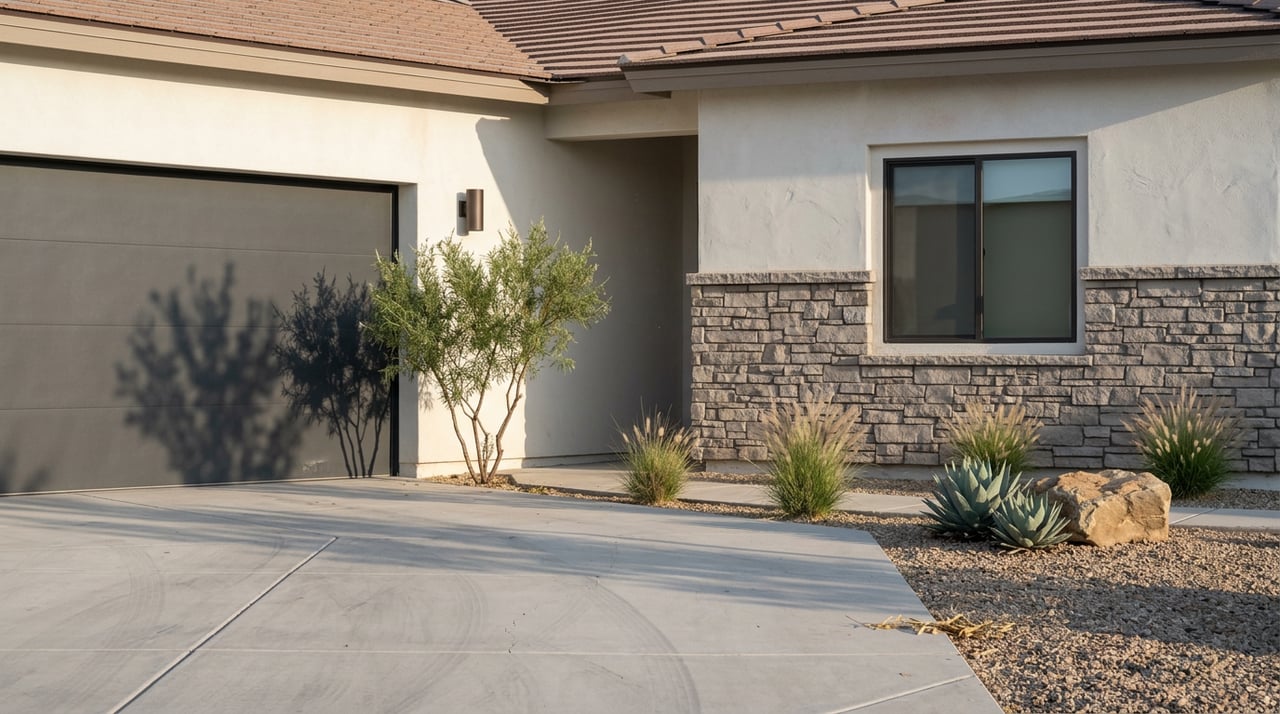
Drive east on I-15 through Washington City and you pass three exits in about six miles. Exit 10 drops you into Green Springs Drive, past a golf course that has been there since before most of the surrounding subdivisions existed. Exit 13 puts you on Washington Parkway, headed toward a Costco and a wall of new rooflines still smelling like fresh stucco. Exit 16 takes you south into Washington Fields, where irrigation ditches that used to water alfalfa now run past finished sidewalks.
Every real estate portal will tell you Washington's median sale price sits around $509,990, based on the most recent monthly reporting through June 2026. That number is accurate. It is also close to useless as a guide to what you'll actually find here, because it's a blend of at least two structurally different housing markets sharing one city limit and one zip code, 84780.
One City, Two Markets Wearing the Same Number
The gap isn't subtle once you separate it out. The city's active inventory of 496 listings breaks into three rough bands. Under $400,000 you're mostly looking at townhomes and starter product concentrated in the newer subdivisions and some of Coral Canyon's older phases. The $400,000 to $700,000 range is the real center of gravity, made up of most Long Valley villages and Washington Fields builds along with established Coral Canyon homes. Above $700,000 you're in Brio, Stucki Farms, view-lot Washington Fields parcels, and the golf-front pockets of Coral Canyon.
What ties all three bands together, and what buyers researching from out of state usually miss, is that homes across every price tier are closing at close to full asking. Washington's overall sale-to-list ratio through June sat at 99.1%, and the subdivision-level numbers back that up: Long Valley closed near 99.7% of list price over the past 13 months, Coral Canyon near 97.86%. The idea that the cheaper, older west side is where a buyer finds more room to negotiate doesn't hold up. Sellers on both sides of the freeway are getting close to their number right now.
What the West Side Actually Sells
Old Town Washington, reached off Exit 10, is the oldest part of the city and the one with the clearest historical anchor. The Washington Cotton Factory, a sandstone building raised between 1865 and 1867 to process cotton for the settlers Brigham Young sent here in 1857, still stands on Frontage Road West and lands on the National Register of Historic Places. That settlement history is why the surrounding neighborhoods, Green Springs and Buena Vista among them, read as established rather than master-planned. Lots are larger, trees have had decades to mature, and the golf course at the center of Green Springs borders the Red Desert Reserve, giving residents direct trail access for hiking and horseback riding that newer subdivisions don't have.
Pricing reflects that maturity in a specific way. Recent listings in subdivisions like the Terraces at Green Spring put price per square foot in the high $190s, and buyers here skew toward retirees and second-home owners who prefer single-level floor plans.
What the East Side Is Building Right Now
Cross to Exit 13 or Exit 16 and you're in land that was farmland within the last generation. Mike Tate, co-owner of Staheli Farms in Washington Fields, has watched that shift happen around his own property. Describing the pull the farm still has on the surrounding growth, Tate told St. George News that "the farm is becoming a destination" even as the fields around it fill in with rooflines.
Long Valley, the largest of the new communities, is a 600-acre master plan where every recorded home was built in 2020 or later, averaging about 1,661 square feet on compact 3,920 square foot lots. Over the past 13 months, 572 homes sold there, with the median price moving from $489,990 in May 2025 to $502,490 in May 2026. That's modest appreciation, but the more telling number is days on market, which stretched from 13 days last spring to 25 days more recently. That's not a market in trouble. It's a new-construction pipeline settling into a normal pace after selling at a sprint.
HOA dues in Long Valley run about $50 a month, and school assignments are close to uniform: 100% of homes feed Horizon Elementary, with 99% feeding Pine View Middle and High. A separate cluster, Sienna Hills, caps the south side of the city with townhomes and vacation-rental-friendly product from Ence Homes, filling a niche the older west side doesn't really offer.
The Same Split Happens Inside One Subdivision
Here's the detail that surprises most buyers who think they've already picked their neighborhood. Coral Canyon isn't one market either. Of its homes, 226 were built in 2020 or later, while 163 date to the 2000-2009 wave, putting the community's average build year at 2016. Over the past 13 months, sale prices there ranged from $401,025 to $722,685, and Coral Canyon's May 2026 closings, 19 of them, came in at a $545,000 median with a 97.86% sale-to-list ratio. HOA dues tell a similarly split story, and not a clean one: current listings put the typical monthly due around $105, while other information tied to the same subdivision cites $47 a month for standard homes and $75 for the Petroglyph section. The exact figure a buyer gets quoted depends on which phase and which listing they're looking at. The same brand name, the same golf course, and the same school zone assignments (98% Coral Canyon Elementary, 91% Pine View Middle, 99% Pine View High) can describe a home from 2005 or a home finished last year, at very different price points and very different monthly dues.
The Interchange Closing the Gap
The thing most likely to change this calculus isn't a price trend. It's concrete. According to Washington City's own project update, the new interchange connecting Southern Parkway (SR7) to George Washington Boulevard is nearing completion, with on and off ramps scheduled to open by late August. Once finished, George Washington Boulevard will eventually tie into Dixie Drive near the St. George Convention Center, and the interchange will give Washington Fields a more direct connection to Sand Hollow and Hurricane. For a city where Old Town sits at Exit 10 and the newest phases sit at Exit 16, that's a real reduction in the drive time separating the two halves of the market, not a cosmetic upgrade.
What This Means If You're Comparing Neighborhoods
If mature lot size, golf course frontage, and trail access matter more to you than a 2024 kitchen, the west side around Green Springs and Old Town delivers that at a lower price per square foot than comparable golf-adjacent product closer to St. George's center. If you want the largest possible floor plan for your budget and don't mind a smaller lot and a newer HOA, the east side communities in Long Valley and Washington Fields are built for exactly that trade.
For investors, the detail worth knowing is that short-term rental approval isn't uniform across Washington City either. Long Valley Skyline, tucked against a red bluff on the north edge of the Long Valley master plan and close to Sand Hollow State Park, is one of the few pockets in the city specifically approved for short-term rental use. That approval doesn't automatically extend to every subdivision nearby, which matters if vacation-rental income is part of the plan.
Quick Answers
Is Washington City the same market as St. George? No. It's a separate incorporated city with its own zip code, 84780, sitting east of St. George along I-15, roughly eight miles from downtown. Its median sale price of $509,990 through June 2026 reflects a supply mix, part legacy west-side neighborhoods and part active new-construction master plans, that doesn't match either St. George's central corridor or the newer builds in Santa Clara and Ivins on the opposite side of the metro.
Which side of the city has more negotiating room? Neither, currently. Sale-to-list ratios across Long Valley, Coral Canyon, and the city overall are all clustered near or above 97%, meaning sellers in both the established west side and the new-build east side are getting close to full asking price.
Does buying new construction guarantee lower HOA dues? Not necessarily, and Coral Canyon is the proof. Its 2020-and-later homes and its 2000s-era homes carry different HOA structures within the same subdivision, so the build phase matters as much as the neighborhood name.
If you're weighing Washington's west side against its east side, or trying to figure out which phase of a subdivision you're actually being quoted, that's the kind of detail worth a direct conversation before you write an offer. River Creek Realty is broker-led by Candy Morrison, who works these Washington County subdivisions directly rather than handing you off to a rotating team. Reach out for a free home valuation and a straight answer about which exit fits what you're looking for.